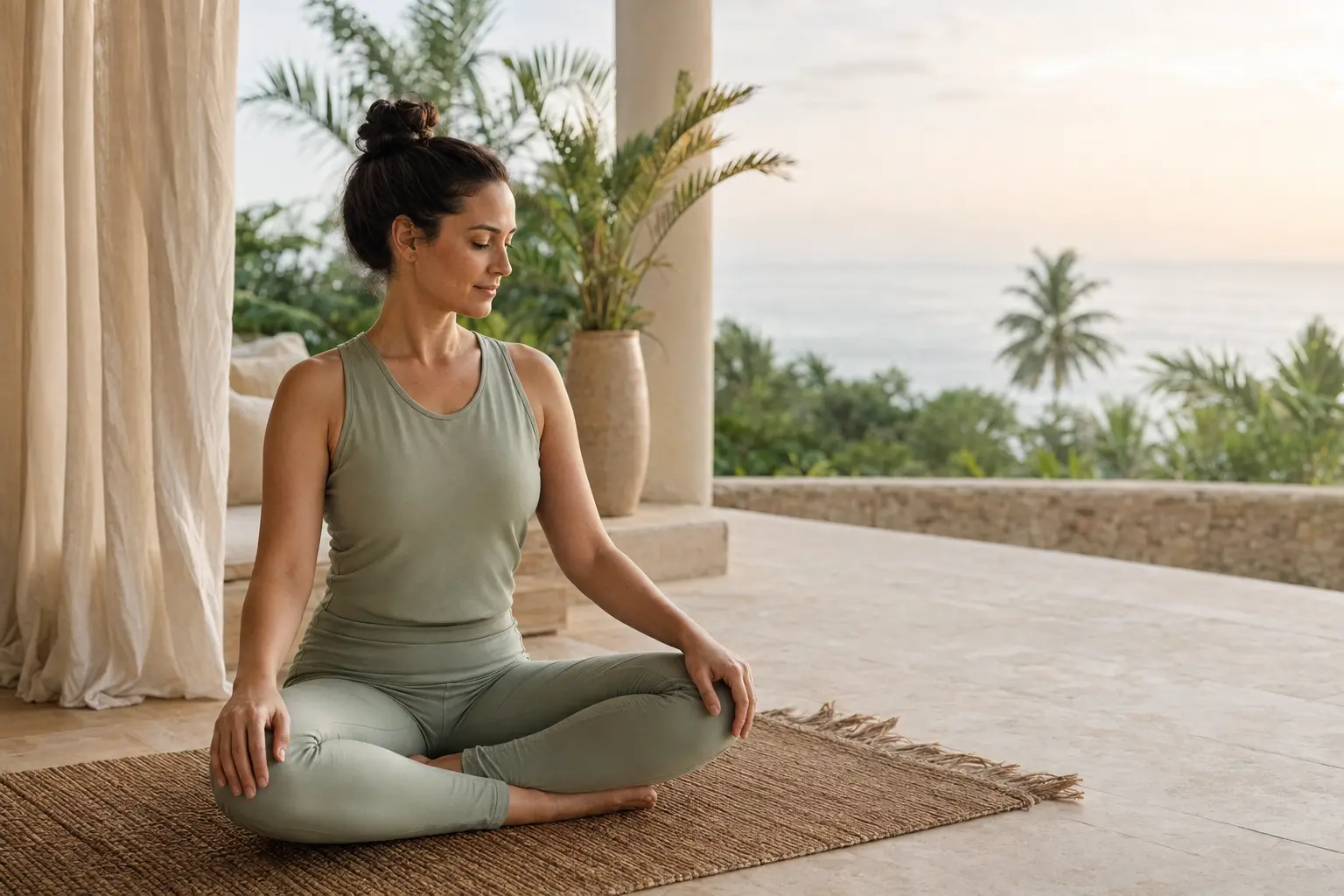
When stress rises, people are often told to “just take a deep breath.” That can help — but bigger is not always better. A forced breath may make you feel light-headed, pressured or even more alert.
The most supportive breathing practice is usually quiet, comfortable and easy to stop. Think of breath as a way to offer the body a steadier rhythm, not as a command to calm down instantly.
Why breathing can influence how you feel
Breathing happens automatically, yet it can also be adjusted intentionally. Stress may make the breath faster, higher or less regular. Gently slowing the rhythm — especially without over-breathing — can provide a simple focus and may reduce the sense of urgency.
Breathing practices are supportive tools, not a replacement for medical or psychological treatment. They also work differently for different people.
Practice one: the unforced longer exhale
- Sit or lie in a comfortable position and let your shoulders be ordinary rather than perfectly aligned.
- Breathe in gently through the nose for a count that feels easy.
- Let the out-breath last one or two counts longer, without squeezing the air out.
- Repeat for five to ten breaths, then return to normal breathing and notice how you feel.
Practice two: hands as feedback
Place one hand on the upper chest and one over the lower ribs or abdomen. Do not try to make the lower hand move dramatically. Simply notice where movement is already present. Invite the breath to widen gently into the lower ribs, then let the exhale soften on its own.
Practice three: breathe with your surroundings
Choose one stable object in the room. Let your gaze rest softly on it while you breathe at a comfortable pace. Silently name “here” on the inhale and “now” on the exhale. Keeping the eyes open can feel more grounding than turning inward.
When to stop or seek support
Stop if you become dizzy, tingly, panicked, breathless or disconnected. Return to your normal breath and orient to the room. Persistent breathlessness, chest pain, fainting or new severe symptoms need medical assessment. If breath-focused practices regularly trigger distress, a trauma-aware practitioner can help you find alternatives.
What the evidence can — and cannot — tell us
Slow, comfortable breathing can influence heart rate, heart-rate variability and subjective stress in some people. Research reviews describe promising effects, but breathing studies vary widely in technique, duration and participant group. It is more accurate to say that paced breathing may support regulation than to claim that one pattern switches the nervous system into a guaranteed state.
The word medicine in this title is therefore metaphorical. Breath practice can be a useful self-regulation tool, but it does not treat every cause of anxiety, breathlessness, insomnia or pain. It should sit alongside appropriate healthcare rather than compete with it.
Why gentler is often safer
Taking repeated very large breaths can lower carbon dioxide too quickly and produce tingling, dizziness, chest tightness or a sense of unreality. Those sensations can resemble panic. A quiet breath with an easy exhale is less likely to create this cycle than forceful over-breathing.
People with respiratory or cardiovascular conditions, pregnancy, a history of fainting, or strong panic responses should avoid long holds and intense breathwork unless an appropriately qualified healthcare professional has said it is suitable. No practice needs to be completed to count as successful; stopping is a valid act of regulation.